Rural communities have always adapted to change. In Eastern Kentucky, business owners and farmers have weathered the decline of whole industries, population loss, and economic uncertainty while continuing to revitalize and invest in their communities. Today, many face a new challenge: rising energy costs that put increasing pressure on already thin margins.
For nearly two decades, Mountain Association has worked alongside small businesses to help reduce energy costs through efficiency improvements and renewable energy investments. One challenge comes up again and again: finding the upfront capital to make those projects happen.
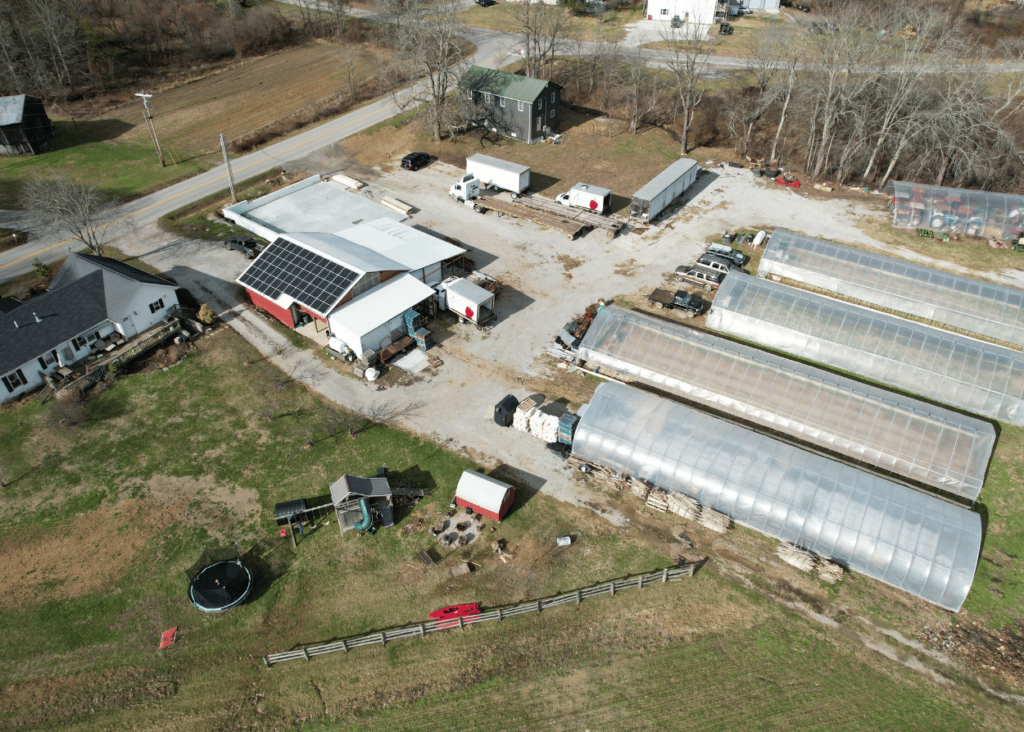
The USDA’s Rural Energy for America Program, or REAP, has been a key reason many of the energy savings projects across Eastern Kentucky have been able to happen. By helping rural businesses and agricultural producers invest in energy-saving upgrades, REAP lowers the barrier to projects that can reduce operating costs, strengthen businesses, and build long-term resilience. Our clients’ REAP-funded projects in Eastern Kentucky are saving them over $564,000 per year on their energy bills.
REAP was created as part of the 2008 Farm Bill, building on earlier USDA energy initiatives aimed at helping rural businesses and farmers reduce energy costs. It has been one of USDA’s most widely used energy programs, helping thousands of farms and rural businesses finance projects that improve competitiveness and long-term sustainability, and has long enjoyed bipartisan support.
Over the years, Congress has reauthorized and expanded the program through subsequent Farm Bills, and funding even increased significantly through the Inflation Reduction Act of 2022, which provided additional resources to support renewable energy and energy efficiency projects across rural America. However, earlier this year, the program was paused while the USDA evaluated its policies.
In October, they issued their final rule for the program which includes significant changes (a summary of which is provided below from LightShed). The one we are most concerned about is that the program will require upgrades like solar and energy efficiency to have been in operation for 12 months prior to receiving any reimbursement.
Effectively, with these new rules, REAP may only help businesses and farms that can already afford their projects without needing assistance. In regions like rural Eastern Kentucky, access to capital is often limited, and cash flow is critical. Requiring businesses to fully fund a project before even having a chance to apply for assistance excludes many of the very enterprises REAP was created to help.
We hope USDA will continue to evaluate the impacts of these changes and consider ways to ensure the program remains a practical tool for rural businesses and farms seeking to lower energy costs and improve long-term sustainability.
As more guidance becomes available, we’ll continue sharing updates and working with businesses across the region to navigate the changing landscape.
Summary of REAP changes from LightShed
What is on offer.
Grants of up to 25% of eligible project cost, capped at $500,000 for renewable energy systems. A $400,000 solar project, for example, could receive up to $100,000. Awards are competitive and ranked nationally, so funding is not guaranteed.
The biggest change.
REAP will now fund projects after they are built. A system must be installed and operating, and the owner must submit 12 months of actual production data along with 12 months of pre-installation utility bills. In the first application window, projects completed 12 to 36 months before the application date can apply. After that, the range is 12 to 24 months.
Other eligibility points.
- Agricultural producers and rural small businesses remain eligible, and the project must be located in a rural area.
- Ground-mounted solar on cropland is not eligible. Rooftop systems are not affected by this restriction.
- Systems installed on or after October 1, 2026 cannot include any component (panels, inverters, racking, monitoring) made in a “foreign adversary” country, a list that currently includes China, Cuba, Iran, North Korea and Russia. Systems installed before that date are exempt.
- Energy used for a residence is not eligible. A business [or farm] that shares a meter with a home needs its own dedicated meter.
- Each application can cover only one site/location, and each owner may submit one application per federal fiscal year.
What we are still waiting on.
USDA has not announced the application window or the amount of funding available. They have also not indicated whether the application process will use the same forms/protocols, or if they’ll have a brand new submission platform to digest. All of this should come in an annual program notice, and we will pass those details along as soon as they are published.