
A former coal miner tending sheep on reclaimed mine land may not seem like the beginning of a story about industrial development in Eastern Kentucky, but that is exactly where the work of the Starfire Community Coalition begins.
When Matthew Benedict, a graduate of the Institute for Energy Studies at Western Washington University, arrived in Hazard as an AmeriCorps volunteer, he was tasked with figuring out how the community could benefit from a recent large-scale solar farm proposal. He found himself having conversations with people like Virgil Baker. Virgil once worked as a coal loader at the former Starfire mine, which spanned Breathitt, Knott, and Perry counties, and today, he operates a farm raising livestock and produce on nearby land.

The Starfire Solar Farm is a large-scale solar project proposed on up to 7,000 to 8,000 acres of reclaimed mine land. The proposed development has led residents to ask an important question: how can local communities ensure they share in the benefits? Could local workers be first in line for new opportunities? Could roads and infrastructure be improved in the communities most affected by the project? Could people like Virgil graze sheep on the land?
The questions led community foundation leaders from the Foundation for Appalachian Kentucky’s affiliate network, organizers, farmers, and residents to form the Starfire Community Coalition, a grassroots effort focused on securing a Community Benefits Agreement, or CBA, with BrightNight, the project’s developer.
The Need for Legally Binding Agreements
Community Benefits Agreements are legally binding agreements between developers and community coalitions that put commitments into writing. Instead of relying on broad promises, a CBA creates accountability around issues such as local hiring, workforce development, environmental protections, and direct investments in local communities.
For many Eastern Kentuckians, that accountability matters.
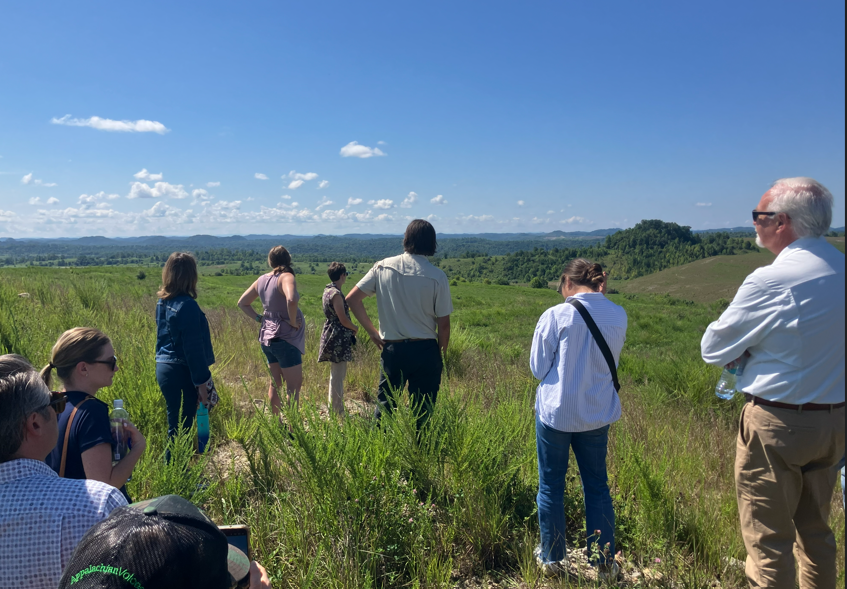
The region has a long history of outside ownership and resource extraction. While coal, timber, and other industries generated wealth, much of that wealth left the mountains. As a result, many residents approach new development proposals with understandable skepticism. The coalition’s goal is to help ensure that local people have a seat at the table and a voice in shaping the outcomes.
Over the past two years, Matthew and other coalition members have held public meetings, visited with community organizations, appeared on local radio programs, and gathered input from residents across the region. Those conversations helped inform a draft Community Benefits Agreement that reflects priorities identified by local stakeholders.
The draft includes provisions supporting local hiring and workforce development, opportunities for agricultural uses such as solar grazing for sheep, funding for community programs, educational opportunities for local students, and measures to address stormwater and flooding concerns.
A More Effective Approach for Data Center Proposals
Efforts to achieve Community Benefits Agreements like this one can inform discussions happening in rural communities across Kentucky as proposals for large-scale data centers emerge.

Data centers can bring construction activity, tax revenue, and new investment, but they can also place significant demands on local infrastructure, most notably electric and water demands. As communities evaluate these proposals, many are searching for ways to ensure locals have a voice in the process.
While for solar projects, a Community Benefits Agreement can help formalize commitments to a community that may not otherwise be required through the permitting process, data centers present a different challenge. Many communities lack the local policies and permitting standards needed to address broader concerns such as water consumption, energy demand, and land use and noise impacts.
“Without those protections in place, a CBA can’t ensure benefits that won’t outweigh the costs,” Matthew said. “CBAs are most effective when communities already have meaningful leverage. Instead of focusing on CBAs, we need every county in Kentucky to pass an ordinance on hyperscale data centers that describes what a developer must do to get a permit to build. That would give communities real local leverage over a developer and make the option of a CBA potentially viable.”
Local ordinances, planning processes, and clear development standards can help establish expectations before negotiations begin. Once communities have that foundation, a Community Benefits Agreement may help secure additional commitments that reflect local priorities. While some communities will be better off with no data center at all, the local ability to reject these projects and prioritize safer development should be paramount.
Visit here for resources on passing local protections regarding data centers, as compiled by Kentuckians for Energy Democracy.
The Mountain Association believes communities deserve the information, transparency and involvement to help shape developments that will affect them for decades. For additional resources related to data center development, visit our Kentucky Data Center Resources page here.