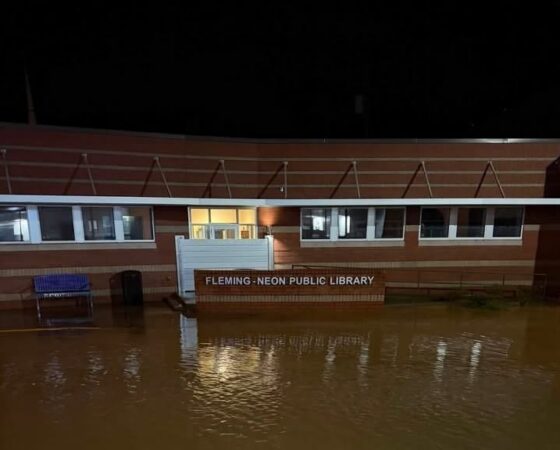
In July 2022, floodwaters entered the library in Fleming-Neon, KY, after a tree breached the doors. The water rose five feet, resulting in a complete loss of the collection and a 4-year closure. Residents joyfully welcomed the library back when it reopened in June 2026. Two months later, flash floods swept through town once again. This time, however, the library was ready.
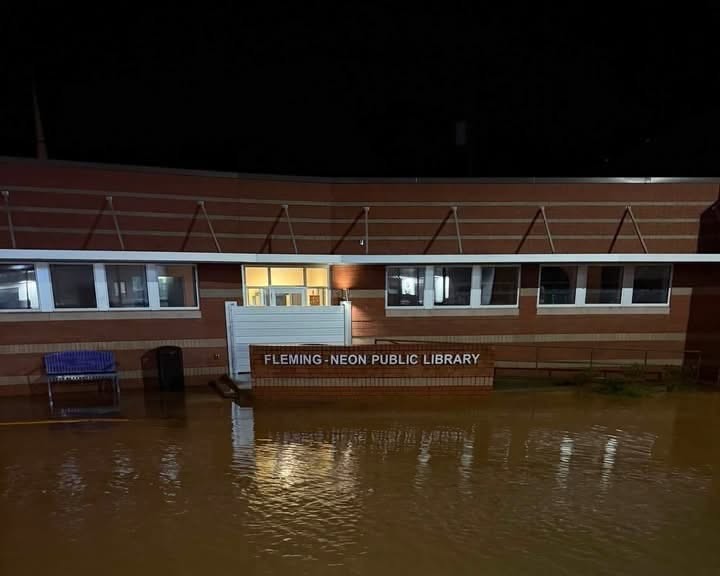
During the rebuilding, several flood mitigation measures were implemented. All windows below the flood line were removed; waterproofing was applied before insulation was installed; water-resistant flooring and drywall were used; trench drains connected to sump pumps just inside the doors collect and remove any water that does get in; and temporary flood barriers were installed on both doors.
When a flash flood warning was issued in August of this year, staff members were able to easily install the metal planks to cover both doors. Alita Vogel, Director of the Letcher County Library, said staff felt relief when the flood barriers worked as promised.
“There was a small amount of water that got in, but it was only a couple of paper towels’ worth,” Vogel reported.
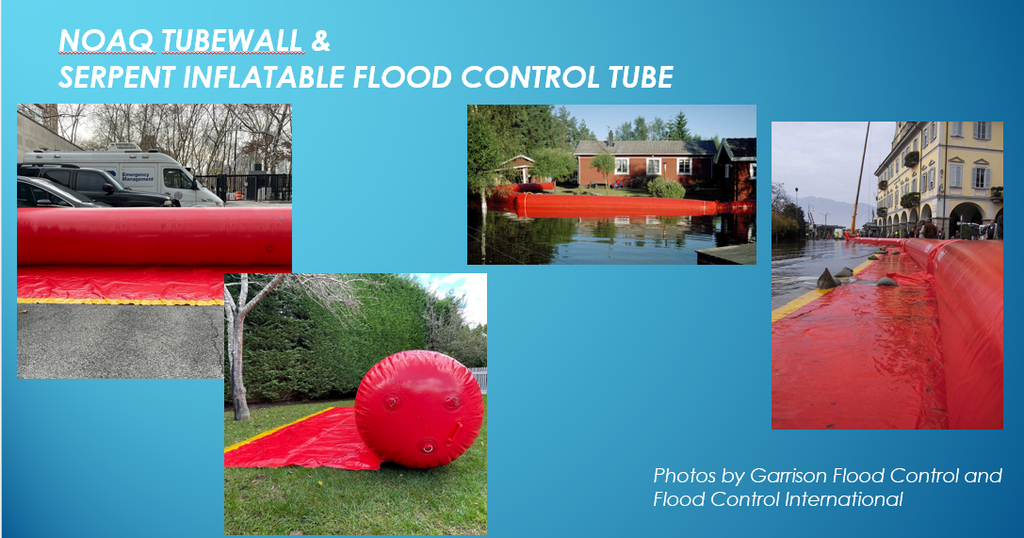
Temporary flood barriers have been used in other countries for decades and are now readily available across the country. Barriers include stand-alone water-filled or air-filled barriers, as well as barriers that can be easily installed over doors and windows when flooding is threatened. The barriers are reusable and can be stored when not in use.
For more information about temporary flood barriers, check out these slides from a presentation sponsored by What’s Next EKY!?: